


GTA: Vice City - Definitive
3.7279.00 Reviews
App Specs
- Version
- 1.90.0
- Updated On
- License
- Free
- Downloads
- 5,000,000+
- Developer
- Rockstar Games
- Categories
- Action
- Platform
- Android
Screenshots



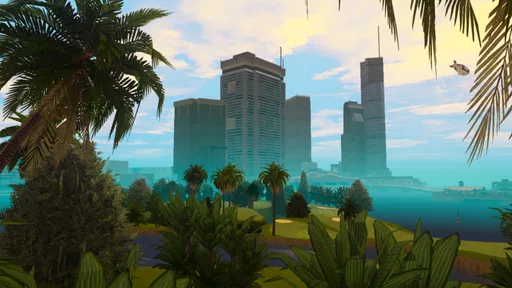
 Analysis by AppCompare
I approached GTA: Vice City - Definitive as someone returning to a familiar open-world crime story on a phone rather than expecting a brand-new adventure. That distinction matters. This is an action game from Rockstar Games built around exploration, driving, shooting, missions, and the exaggerated atmosphere of Vice City. Its 1980s setting gives it a strong personality, but the experience still depends heavily on whether you enjoy older open-world design and touch controls.
The game is free to download, carries a Mature 17+ age rating, and has attracted more than five million installs. Its average sits at 3.7 from roughly seventeen thousand ratings, which tells me the appeal is broad but the mobile experience is not perfect for everyone. I found the best way to judge it was not by expecting console-level comfort from a phone, but by asking a simpler question: can a first-time player get through the opening, understand the controls, and reach a satisfying early success without feeling lost?
From installation to your first real win
I’d treat the opening as a chance to learn the rhythm, not as a test of speed: follow one objective, use the map to orient yourself, and notice which controls feel awkward before the pressure rises. A small adjustment—like slowing down before turns—can make the first completed mission feel earned rather than lucky. Once that basic loop feels clear, it’s easier to decide how much exploring you want to do next.
What the Vice City setting feels like on a phone
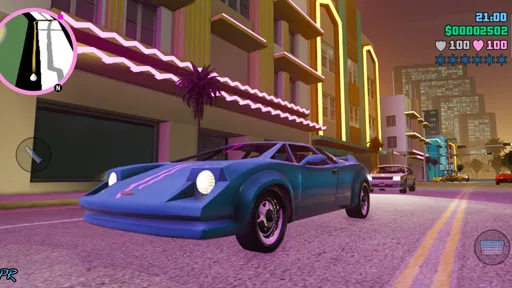
The first thing that stands out is the setting. Vice City is colorful, loud, and deliberately theatrical, with bright streets, beaches, businesses, traffic, and a soundtrack-minded sense of time. Even when I was not following a mission, driving around felt like part of the game rather than empty travel. The city gives the action a recognizable shape, so I could use landmarks and neighborhoods to build a mental map instead of treating the world as a collection of anonymous roads.
That atmosphere is the main reason to choose this game over a simpler mobile action title. Many phone games are designed around short encounters, menus, or repeated stages. Here, the pleasure comes from moving through a connected city and deciding whether to continue a mission, explore a side street, or simply drive until something catches your attention. It feels more like carrying a compact open-world campaign than opening a casual time filler.
At the same time, the age of the original design is noticeable. Missions can be direct and memorable, but they do not always explain themselves with the hand-holding found in newer games. Some objectives expect me to pay attention to dialogue, watch the map, and understand the logic of the situation. If you prefer a tightly guided action game with constant prompts, this version may feel rough around the edges. If you enjoy learning a city through trial and error, that roughness becomes part of the charm.
The Mature 17+ rating is important rather than decorative. The story, language, violence, and criminal subject matter are aimed at adults, so I would not install it for a child simply because it is available on a phone. I also would not choose it for someone looking for a calm driving game. The driving is connected to crime missions and action, and the tone stays firmly in that lane.
Worth Reading Before You Choose

EA SPORTS FC Mobile 26 Is a Bigger Football Game, but It Takes Time

Flipboard Shows What News Apps Must Do Beyond the Feed

Switching to Android Auto Means Rethinking Your Driving Routine

Google Calendar Makes a Crowded Week Easier to Manage

Ludo King Makes the Most of the Minutes Between Plans

Baby Panda World Brings Quick Play to Modern Phones, but Its Game Library Feels Busy
Setting up without making the opening harder
Before starting, I would make sure the phone runs at least iOS or iPadOS 11. The current version is 1.90.0, so keeping the device software reasonably current is a sensible first step. I would also free enough storage for the installation and close demanding apps before launching, not because the game promises a particular performance level, but because an open-world action game benefits from having the phone focused on one task.
The game is free to download, while in-app purchases are listed at $19.99 per item. I would treat that as a reason to check the purchase screen carefully rather than assuming every part of the experience is included in the initial download. For a first session, I would avoid spending immediately. I would play long enough to understand the controls, the mission rhythm, and whether the phone feels comfortable in my hands. That small pause prevents a common mistake: paying before knowing whether the mobile format suits you.
My practical setup advice is to hold the phone in a way that leaves both thumbs relaxed. One thumb needs to manage movement or steering, while the other handles looking, aiming, and actions. On a smaller screen, the virtual controls can compete with the view, especially during a chase or a quick fight. I found it more useful to make small, controlled movements than to press aggressively. Touch input rewards patience; frantic swipes often create more problems than the enemies do.
I would also begin with the sound at a comfortable level and play the opening somewhere with few interruptions. Dialogue and mission instructions are easy to miss when a notification or conversation pulls attention away. In this game, missing a line can leave me wondering whether I should follow a person, reach a location, steal a vehicle, or escape. A quiet first session is not essential, but it makes the learning curve much kinder.
The first meaningful success is understanding the mission loop
For a new player, the first useful goal is not to roam everywhere or master every weapon. It is to complete an early mission while staying aware of how the city, map, vehicles, and action controls fit together. Once I understood that loop, the game became much less intimidating: receive a task, identify the destination, travel there, complete the objective, and return to the wider city with a better idea of what to do next.
I recommend driving more carefully during the first few missions than instinct suggests. Crashing into traffic may be funny, but it can also leave the vehicle damaged, put me in a bad position, or turn a simple trip into an unnecessary fight. I learned more by treating the road as part of the mission than by rushing directly toward every marker. The city is easier to read when I slow down enough to notice intersections, open spaces, and routes that avoid crowded streets.
When combat begins, I focus first on positioning. Touch aiming can feel less precise than a physical controller, so standing in a sensible place is often more valuable than trying to react at the last second. I look for room to move, keep the camera pointed toward the threat, and avoid tapping wildly. This is one of the most useful mobile-specific lessons: good positioning compensates for imperfect touch precision.
A successful first mission also teaches when not to improvise. The open world invites chaos, but the mission objective remains the reliable path forward. I can explore after finishing the task, when I have a clearer sense of the area and the controls. Trying to turn the opening into a free-form rampage may produce amusing moments, but it can also make the game seem confusing because I have not yet learned what the story expects.
Why the controls cause more confusion than the story
The biggest early obstacle is usually not understanding who the characters are. It is remembering which touch gesture or button handles each action while the situation is moving quickly. Driving, changing direction, aiming, entering vehicles, and reacting to mission prompts can feel like separate skills. I recommend practicing each one in a low-pressure moment instead of waiting for a difficult chase to reveal the weakness in my setup.
Camera control deserves special attention. If the view points away from the road or an approaching enemy, the game can suddenly feel unfair even when the real problem is orientation. I make short camera adjustments and then return my attention to movement. Long swipes are tempting, but they can spin the view too far. In combat, I try to keep the target near the center of the screen before attempting a shot or action.
Another common confusion is assuming that every visible opportunity is part of the current mission. Vice City contains plenty of distractions, and the game does not always feel like a modern checklist. When I am unsure, I return to the active objective, check the map, and look for the most direct route. That habit is more dependable than wandering until the next event happens.
Driving can also create a false impression that the game is harder than it is. A vehicle may feel awkward if I approach every corner at full speed, especially with touch steering. I get better results by braking before a turn, making a wider arc, and correcting gently. The trade-off is that careful driving takes longer, but it reduces the number of avoidable failures and leaves more attention for the mission itself.
There is a broader adjustment here. Older open-world games often expect the player to notice patterns rather than follow a constant stream of instructions. I had to listen, observe, and remember. That can be rewarding, but it is not ideal for someone who wants instant clarity. A newer action game may offer smoother onboarding and more forgiving controls, while this title offers a stronger sense of discovering how the world works.
How I would handle a normal evening session
Imagine having half an hour after work and wanting something more substantial than a quick arcade round. I would start with one story objective rather than promising myself a long campaign session. I would drive to the mission, complete it, and then spend the remaining time exploring nearby streets or testing the controls away from the pressure of the objective. That approach makes progress feel achievable even when the day is busy.
If I failed, I would avoid immediately repeating the same attempt with the same approach. First I would ask what actually went wrong. Was the vehicle too damaged? Did I lose the target because I ignored the map? Was the camera pointed away during combat? Did I rush a turn? Identifying the cause turns failure into a practical adjustment instead of a frustrating loop.
This is also where the game works better than many short-session alternatives. A quick mobile action game may give instant feedback, but it usually cannot offer the same feeling of returning to a persistent city and continuing a story. Vice City can fill a short break with a single mission, yet it also gives me reasons to stay longer when I have more time. The compromise is that loading into a large world and getting settled can feel heavier than launching a match-based game.
Who will enjoy it and who should choose something else
I think this is a strong fit for players who like story-led action, driving through a recognizable city, and the freedom to approach the world at their own pace. It is especially appealing if you enjoy the style of Rockstar Games and want a mobile version of a substantial open-world experience rather than a game built around isolated levels. The 1980s presentation gives it a clear identity that many generic action games lack.
I would be more cautious if you mainly play with one hand, dislike virtual controls, or want a completely frictionless modern interface. The game asks for attention from both hands and rewards learning its control layout. Someone who becomes annoyed by camera corrections, vehicle handling, or missions that require observation may have a better time with a newer action title designed specifically for touchscreens.
It is also not the best choice for a player seeking online competition or a peaceful sandbox. The appeal is the single-player-style city adventure and its criminal action tone. The age rating should guide the decision as much as the genre label. I would keep it away from younger players and from anyone uncomfortable with mature themes.
Compared with a conventional mobile action game, this offers more atmosphere and a greater sense of place, but less immediate simplicity. Compared with playing a similar open-world game with a physical controller, the phone version is more convenient but usually demands more patience from my thumbs. That is the central trade-off: portability wins, while control comfort may lose.
What to do after the opening clicks
Once the first missions feel manageable, I would stop treating the map as a route between objectives and start using it as a space to learn. Notice which roads are easy to navigate, where traffic creates trouble, and how different areas connect. This knowledge pays off later because travel becomes less stressful when I recognize alternatives instead of relying on a single direct path.
I would also separate experimentation from progress. When I want to test driving, aiming, or general movement, I would do it away from an important objective. When I want to advance the story, I would keep the plan simple and avoid unnecessary detours. This two-mode approach is a small but valuable workflow: exploration stays fun, while mission attempts stay focused.
Another useful habit is to give myself permission to stop after a successful objective. Open-world games can encourage endless wandering, but ending a session after meaningful progress makes it easier to return later. I prefer leaving with a completed task and a clear next destination rather than playing until frustration sets in. That is particularly helpful on a phone, where a short session may be interrupted at any time.
The listed average rating of 3.7 reflects the same balance I felt while playing: the underlying game has a strong identity and plenty of content, but the mobile format can create friction. The five-million-plus install figure shows that many people are willing to try that compromise. I would not interpret popularity as proof that every phone handles it equally well, though. Comfort depends on the device, the screen, the control layout, and the player's tolerance for older design choices.
My final recommendation is straightforward. Try it if you want a mature, story-driven action game with driving, exploration, and a vivid 1980s city, and give yourself time to learn the touch controls before judging it. Do not choose it simply because it is free or because you want a quick, effortless mobile game. Its best moments arrive after the first layer of control friction has faded.
For me, the most convincing reason to keep playing is the way a small success changes the whole city. After completing an early objective, I no longer felt like I was merely tapping through a port. I felt oriented, capable, and curious about what the next street or mission might bring. That is enough to recommend GTA: Vice City - Definitive to the right player, with the honest warning that patience and a Mature 17+ audience are part of the package.
Pros
- Faithful recreation of Vice City's iconic 1980s atmosphere
- Large open world with varied missions and side activities
- Improved aiming and driving controls for mobile devices
- Strong voice acting and memorable radio stations
- Works offline after the initial installation
Cons
- Requires substantial storage space and a compatible modern device
- Touchscreen controls can feel awkward during precise gunfights
- Some visual glitches and performance drops may occur
- The campaign is relatively short compared with newer open-world games
- Premium price may deter players expecting a free-to-play experience
FAQs for GTA: Vice City - Definitive
What is GTA: Vice City – Definitive Edition?
GTA: Vice City – Definitive Edition is a remastered version of Rockstar Games’ classic open-world action game. It follows Tommy Vercetti as he builds a criminal empire in a colorful 1980s-inspired Miami setting. The Definitive Edition includes updated character models, improved lighting, enhanced textures, modern controls, and several visual refinements while preserving the original missions, story, radio stations, and gameplay style.
Can GTA: Vice City – Definitive Edition be played offline?
Yes, the game is generally designed to support offline play after the required installation and initial setup have been completed. An internet connection may still be needed for downloading the game, verifying access, installing updates, or restoring purchases. Players should also make sure they have enough free storage space and launch the title once while connected before relying on offline access.
What devices are compatible with the mobile version?
Compatibility depends on the specific Android or iOS device, operating-system version, available storage, and hardware performance. Newer phones and tablets usually provide a smoother experience, while older or entry-level devices may experience slower loading, reduced visual quality, or crashes. Before downloading, check the official store listing because supported devices and requirements can change after updates.
Does the game include multiplayer or online features?
No, GTA: Vice City – Definitive Edition is primarily a single-player experience. Its main content consists of story missions, optional activities, exploration, vehicle driving, combat, and collectible hunting within the open world. It does not provide the multiplayer progression or online world found in GTA Online. Players should download it for the campaign and classic sandbox gameplay rather than competitive or cooperative modes.
Is GTA: Vice City – Definitive Edition suitable for children?
The game is intended for mature audiences because it contains strong language, violence, criminal themes, sexual references, drug-related content, and other adult situations. Parents should review the age rating in their region before allowing access. On mobile devices, it is also worth checking purchase controls, account settings, and screen-time restrictions, particularly if the device is shared with younger users.


